


Omani Researchers Pioneer Solar-Powered System to Extract Irrigation Water From Ambient Air
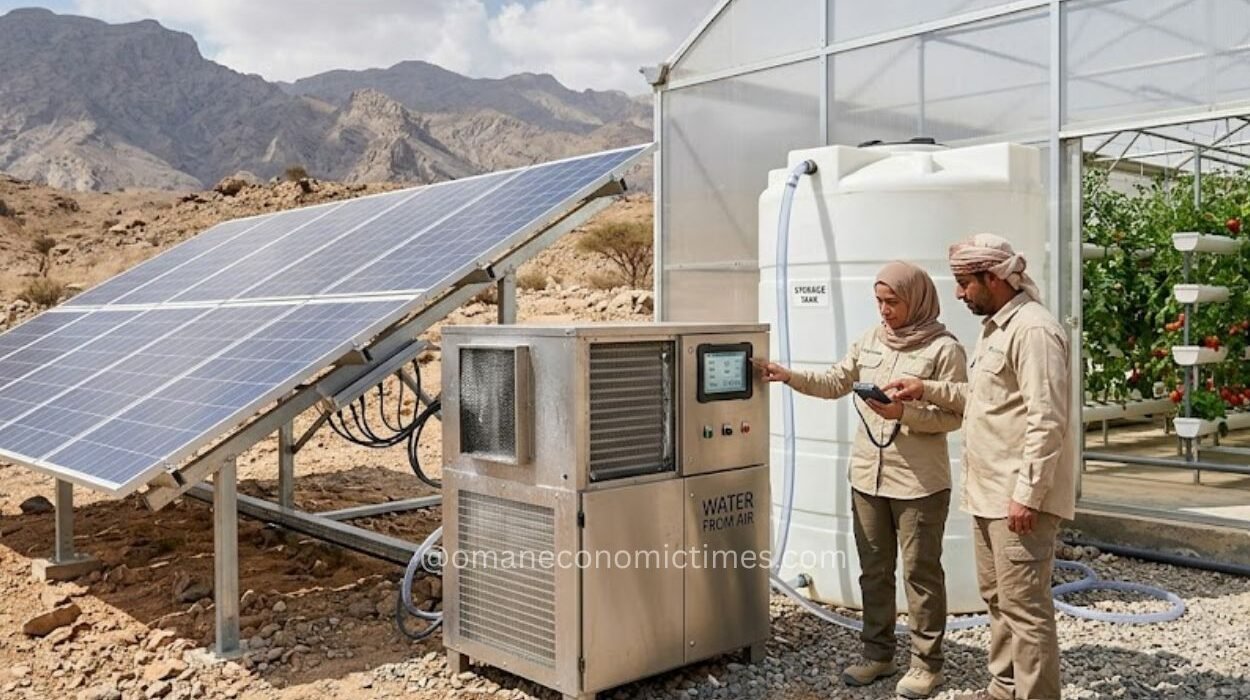
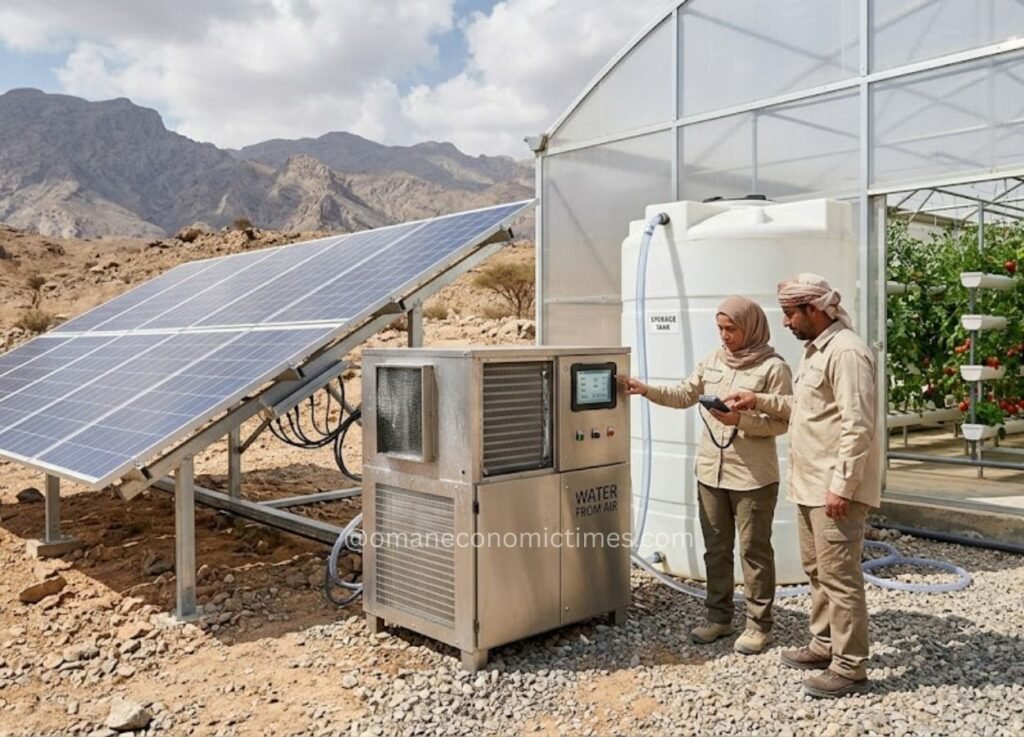
Omani researchers have developed a sustainable farming system that harvests water from the atmosphere for irrigation, offering hope for agriculture in water-stressed environments. Omani solar water extraction
The project, spearheaded by Dr. Ahmed Al Busaidi from the College of Agricultural and Marine Sciences at Sultan Qaboos University, addresses important challenges faced in the Sultanate.
It has been sponsored by the Research and Innovation Authority, together with the Ministry of Agriculture, Fisheries, and Water Resources, and demonstrates the possibility of harvesting atmospheric water and using it together with photovoltaic energy to grow crops soillessly.
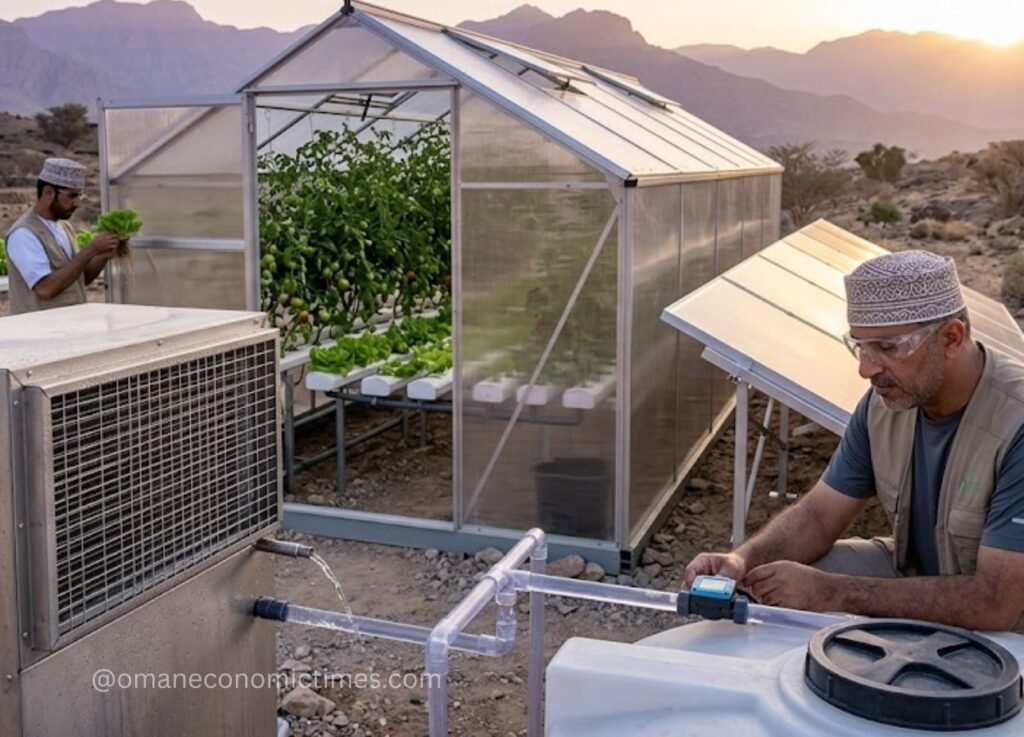
Regional environmental assessments conducted by the research group highlighted strategic deployment zones nationwide. Humid coastal belts in the north offer ideal conditions for dual municipal and industrial supply, whereas remote central districts and southern border areas near Saudi Arabia and Yemen present optimal environments for agricultural extraction.
Field trials revealed that atmospheric harvesting units generated up to 100 liters of fresh water daily depending on localized ambient humidity and equipment specifications.
To test practical applications, the team constructed an experimental facility linking water generators directly to solar arrays and controlled hydroponic beds. Comparative crop trials demonstrated remarkable yields; greenhouse-grown tomatoes achieved an average height of 186 centimeters and a chlorophyll reading of 25.5, dwarfing outdoor control plants, which reached merely 76.5 centimeters with an 8.23 chlorophyll index. Similar performance gains were recorded in leaf mass and nutrient absorption for lettuce crops.
Beyond mitigating harsh climatic conditions and soil degradation, the integrated facility provides strong economic viability. Year-round greenhouse cultivation stabilizes grower revenues, while off-grid solar infrastructure lowers operating overheads and allows operators to sell excess electricity back to local supply networks.
To scale the technology, Dr. Al Busaidi urged the integration of artificial intelligence and automated sensor networks to regulate pH balances and fluid delivery dynamically. The research team—which included specialists Dr. Adil Al Mahdouri, Dr. Hamed Al Dhuli, Eng. Zahir Salmani, Eng. Seif Al Tubi, Eng. Dawod Al Qasmi, Eng. Badriya Al Hosni, and Dr. Buthaina Al Wahaibi—recommends expanding crop trials to high-value botanical varieties while establishing technical incentives to accelerate commercial adoption across the Gulf region. Oman Economic Times