



90% of Gen Z can’t stay off their phones at work

To better understand how digital habits are shaping behaviour, the team at PlayersTime analytical firm commissioned an online survey, examining attitudes toward excessive internet use, social media dependency, and AI-generated content. The survey was conducted online among 1,509 adults in April, with participants primarily from North America and Europe.
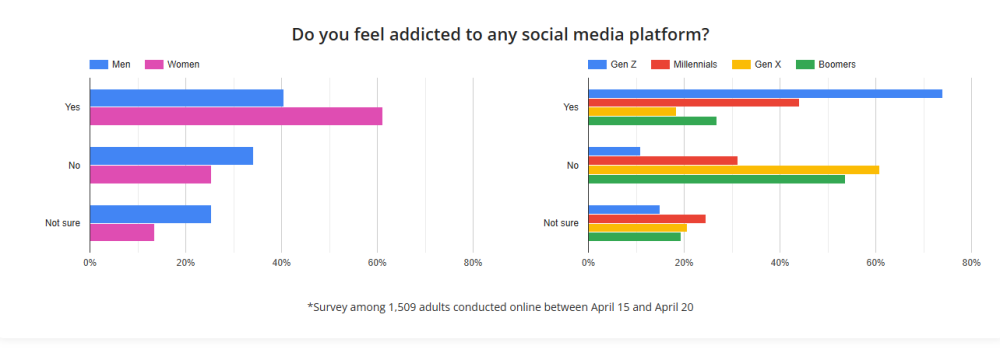
Findings suggest that while a majority of users recognise signs of overuse or addiction, far fewer feel able to meaningfully reduce their screen time. Nearly half (49.3%) admit they are addicted to social media, with 61.1% of women and 40.6% saying this. Among Gen Z, this rises to 74.1%, highlighting how younger users are far more likely to recognise or, indeed, experience a loss of control over their digital habits.
Moreover, just 10.1% say they’re satisfied with their digital life, while 64.1% want to stop mindless scrolling, and 61% want to spend less time online but can’t. The data points to a growing sense that digital habits are no longer fully within users’ control. As digital fatigue sets in, users are increasingly looking for ways to break the cycle, with TikTok reflecting a surge in ‘reset’ culture – hashtags like #screentime (198,900 posts), #dontscroll (141,600), and #digitaldetox (89,600) are rapidly gaining traction.
Here are a few key takeaways from the report:
More than 51% of respondents spend over 3 hours a day on social media, including 18.2% exceeding 5 hours. Across the wider Internet, 78% spend at least 5 hours online daily, while 21% admit to being online for over 8 hours, indicating near-constant digital exposure. Gen Z is leading the ‘always online’ generation. A striking 78.6% of Gen Z spend more than 3 hours daily on social media, compared to just 7.5% of Baby Boomers. For younger users, heavy usage isn’t occasional, it’s the baseline, redefining what ‘normal’ screen time looks like.
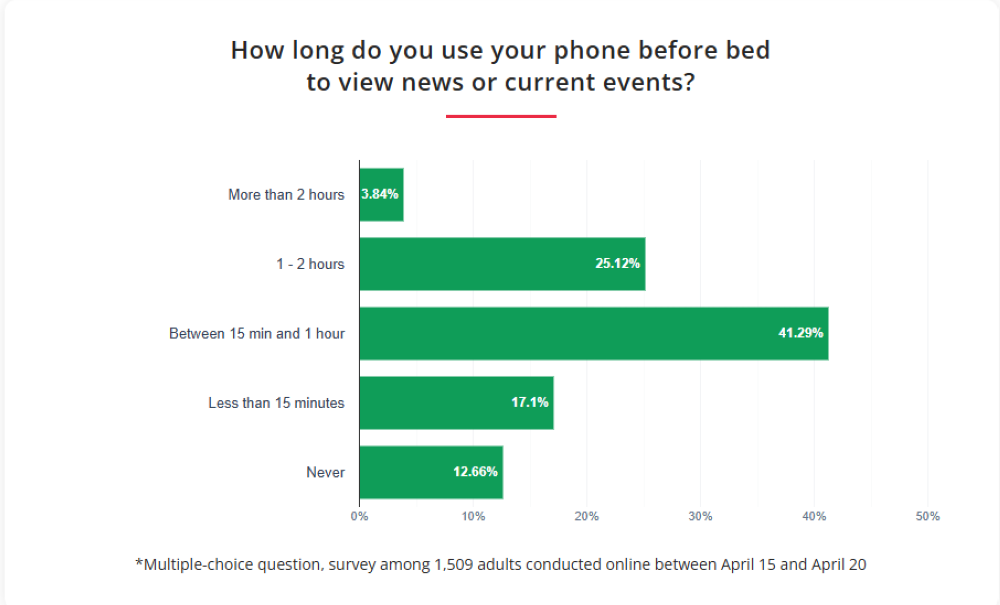
The day starts and ends on the phone. Nearly 82% check their phone within five minutes of waking up, with 45.8% doing so every morning. At night, 66.4% spend at least 15 minutes on their phones before bed, reinforcing a cycle where digital content frames both the start and end of the day. Mindless scrolling has become routine behaviour.
Over 54.7% say they scroll without noticing time passing every day or several times a day, with another 20.5% doing so occasionally. Only 10% say this never happens, suggesting that for most users, being online is increasingly automatic rather than intentional.
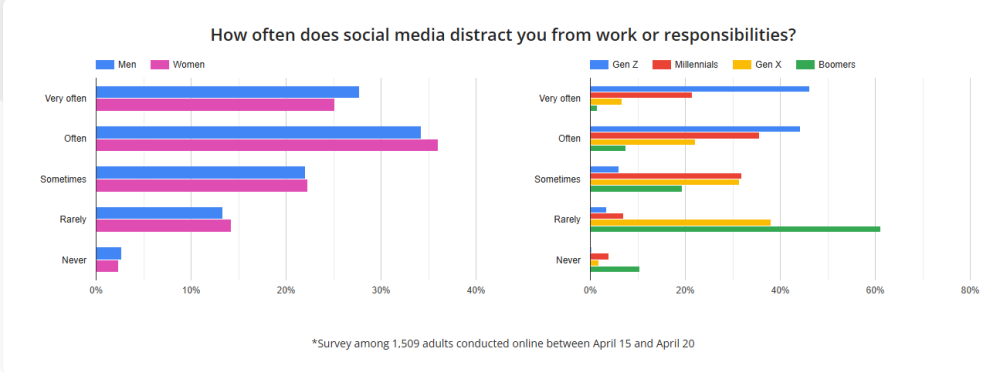
Social media is actively disrupting work and productivity. Around 62% of men and 61% of women say social media distracts them from responsibilities often or very often. Among Gen Z, over 90% report frequent distractions, indicating that digital interruptions are becoming embedded in everyday workflows. The emotional toll of being online is overwhelmingly negative, with 64.4% of respondents feeling tired and exhausted after long sessions. More than half (56.5%) report burnout, and 45.7% feel drained. By contrast, fewer than 3% say they feel happy or productive, suggesting that extended screen time rarely delivers positive outcomes.
‘With more than half of users spending 3+ hours a day on social media and nearly 55% admitting to mindless scrolling daily, the issue is intensifying, particularly for younger generations. They are not adapting to social media, content overflow and AI slop, they are growing in this environment.We can see users’ awareness as a majority openly admit that they feel addicted, yet just as many say they struggle to cut back. But while the issue might be recognised, it remains unresolved, and the emotional cost is becoming harder to ignore, with most users reporting fatigue, anxiety, and burnout after prolonged time online.


